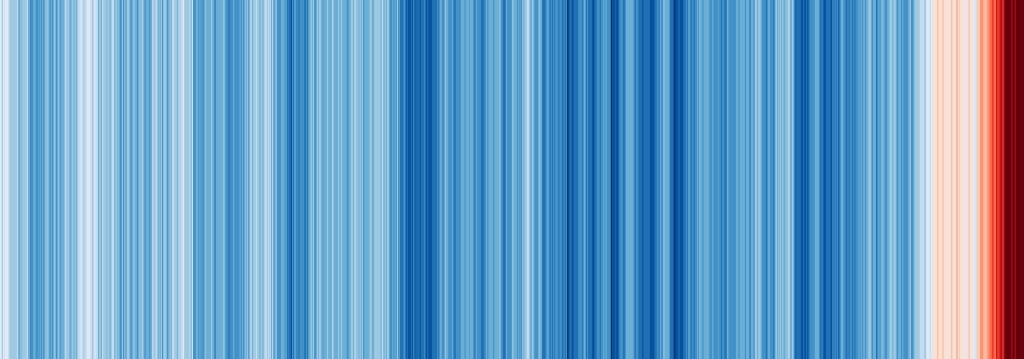

Climate change may seem totally new. Human-caused global warming has only heated our planet for about a century. And only in recently has it felt like a serious and urgent threat to humanity.
But if you define climate change as a long-term shift in weather, then it has always shaped the Earth. History’s climate changes were caused by natural forces, which made them different from today’s global warming. Now, researchers are uncovering evidence – in everything from sediments at the pitch-black bottom of the ocean to texts stored in dusty archives – which seems to reveal that nature’s climate changes profoundly influenced humanity’s past.
In 42 episodes and eight seasons, The Climate Chronicles draws on the latest scholarship in such fields as archaeology, history, climatology, and geology to paint a comprehensive picture of how climate change shaped humanity’s past. Narrated like an audio book with vivid music, transcripts, unique images, and teaching guides, The Climate Chronicles unpacks complicated concepts in plain language, and avoids unnecessary jargon. Every episode is a stand-alone story, and every season its own distinct chapter in climate’s history.
The Climate Chronicles is written, narrated, produced, and published entirely by Professor Dagomar Degroot, a leading historian of climate change, and it’s financially supported – in part – by Georgetown University’s Earth Commons. It’s is a one-of-a-kind resource: a podcast, a website, and a YouTube channel with dramatic trailer videos that make history come alive for students of all ages. It’s multimedia, multidisciplinary, and best of all: it’s ad-free.
Intended for anyone interested in climate change or history, The Climate Chronicles will help you understand the past – and the future – in a whole new way.
Winner, 2025 European Society for Environmental History Bristol-Bern Prize in Public Environmental History
For more on the making of The Climate Chronicles, see:
- Dagomar Degroot, “Making The Climate Chronicles: Reaching Broad Audiences and Telling Fresh Stories with New Technology.” Historical Studies in the Natural Sciences 56:1 (2026).
- Dagomar Degroot, “The Climate Chronicles: Reaching Students Where They Are.” Environment and History 32:1 (2026).
Dagomar Degroot

The creator, writer, producer, and publisher of The Climate Chronicles, Dr. Dagomar Degroot is an associate professor of environmental history at Georgetown University in Washington, DC. He is a former Baruch S. Blumberg NASA/Library of Congress Chair in Astrobiology, Exploration, and Scientific Innovation, and he the 2026 winner of the Dan David Prize in history.
Degroot’s work bridges the humanities and sciences to explore how communities have responded to abrupt changes in environments on Earth and across the Solar System. He aims to better understand how environmental forces have shaped human history – partly to offer fresh perspectives on the gravest threats and greatest opportunities of the twenty-first century.
Much of Degroot’s scholarship identifies past changes in climate and considers how they influenced human history. His first book, The Frigid Golden Age: Climate Change, the Little Ice Age, and the Dutch Republic, 1560-1720 (Cambridge University Press, 2018) explores how the Dutch Republic endured the Little Ice Age, a period of natural climatic cooling. The book reveals that while climatic cooling worsened disasters that the Dutch struggled to overcome, it also offered opportunities that the Dutch aggressively exploited. The Frigid Golden Age was named by the Financial Times as one of the ten best history books of 2018. Currently, Degroot is co-editing a series of volumes that consider different dimensions of past climate change in order to inform present-day policy, including the forthcoming Oxford University Press Handbook of Resilience in Climate History.
Degroot publishes widely in historical and scientific journals, including Nature and The American Historical Review. In many of his publications, he uncovers how populations found ways to be resilient and adaptive in the face of climate change. Degroot also works to develop new methods for connecting human and climatic histories; reconstruct climatic trends across the oceans; uncover previously overlooked relationships between climate change and conflict; and incorporate the histories of animals within the human history of climate change.
A second area of focus for Degroot is the environmental history of outer space. His second book, Ripples in the Cosmic Ocean: A History of People and Environments in the Changing Solar System (Harvard University Press/Viking, 2025), argues that dynamic environments across the Solar System have profoundly influenced the human history of the past five centuries. He is co-authoring another book, tentatively entitled Breach, that reframes the early history of the Space Age as a close encounter with the existential risk of microbial contamination.
Degroot teaches courses at Georgetown on topics that include the Pleistocene, the Little Ice Age, the impacts of global warming, the environmental history of outer space, existential risk, and the Anthropocene. He regularly plans major events at Georgetown that explore different dimensions of today’s environmental crises, as well as outer space exploration, exploitation, and settlement. He also aims to bring the lessons of the past to activists, policymakers, and the general public.
Degroot regularly gives lectures to audiences around the world, and his writing has appeared in Aeon, The Conversation, National Geographic, and the Washington Post, among other outlets. He has been interviewed for articles that appeared in, for example, Axios, the BBC, CNN, the Los Angeles Times, the New York Times, Popular Science, Space.com, USA Today, and the Washington Post. He currently writes a column, Horizons of Humanity, for Science Politics.
To keep up with Degroot’s latest publications, visit DagomarDegroot.com.