
Listen to the Episode:
August 30th, 1633. The high Arctic.
A fleet weighs anchor and slips out of a bay in the Svalbard archipelago.
Jagged mountains loom in the background, soaring above wisps of fog and the first sea ice of winter.
On the rugged, windswept shore of Amsterdam Island, seven men watch the ships disappear in the distance.
They are, quite possibly, the most isolated people on Earth. For eight months, the nearest humans will be more than 500 kilometers away.
Seven men, alone in an unforgiving, unfamiliar world. Will they survive?
The answer may seem unimportant, four centuries later. But it matters a great deal, right now – for your life, and for mine.
You see, the answer could tell us not only how climate change influenced our history, but also, how it could shape our future.
Welcome to the introductory episode of the “Climate Chronicles,” a multimedia project that will take you through the history of climate change, from the deep past to the warming present.
I’m Dagomar Degroot. I’m a professor who studies the history of climate change at Georgetown University in Washington, DC.
It’s a long history, and that might surprise you. Human-caused global warming didn’t have much of an impact on Earth until a few decades ago. But climate has always changed, even if it’s changing for different reasons today.
For over 15 years, I’ve worked with scientists to figure out how climate changed in the distant past. I’ve explored how human populations hundreds or even thousands of years ago survived or succumbed in the face of climate’s changes. And I’ve tried to determine how the history of climate change can help us survive today’s climate crisis.
I’ve spoken to and written for audiences all around the world. I’ve met with politicians and activists, military officers and corporate leaders – and I’ve taught thousands of students here in Washington.
In The Climate Chronicles, I’ll tell you what I tell them. I’ll teach you what I’ve learned.
I’ll introduce you to cutting-edge scholarship in everything from genetics to paleoclimatology, from zooarchaeology to environmental history. I’ll break down every concept, every piece of evidence, as well as I can.
I’ll explain not only what climate researchers think they know, but also why they think they know it, how they came to discover it, and why they might be wrong.
On a website, TheClimateChronicles.com, I’ll provide detailed maps and graphs, complete episode transcripts, citations to key publications, and vivid infographics for teachers to use in the classroom.
Whether you’re a high school student or a seasoned politician, a history buff or an environmental activist, I hope the Climate Chronicles will help you understand the past, and imagine the future, in a whole new way.
In this first episode, I’ll explain what happened to those seven men on a lonely Arctic coast. I’ll tell you how they coped with climate change, long before our civilization started warming the Earth.
It’s a story that’s been all but forgotten for nearly four hundred years. But I think it’s a story that matters a lot more now than it did in 1633.

Svalbard lies halfway between the northern coast of Norway and the North Pole.
In 1596, Dutch explorers looking for an Arctic sea route to China were the first to see the towering mountains of the archipelago’s biggest island, Spitsbergen.
Explorers later reported that thousands of massive bowhead whales fed in Spitsbergen’s bays every spring. Some of the largest animals that ever lived, bowheads have the thickest blubber of any whale.
By the early seventeenth century, men from coastal towns across Europe sailed north to hunt the bowheads. Young and desperate, many hoped for a chance to escape poverty.
They pursued whales relentlessly, first from makeshift shacks along the coast; eventually from fortified whaling stations.
The Dutch built the largest of these stations on Amsterdam Island, Amsterdamøya as it’s now called. It’s located in the northeastern corner of Svalbard.
At Smeerenburg – Dutch for “blubber town” – they boiled the blubber into oil that sold for a tidy profit back home.
European sailors had never ventured so far north. The strange environments of the Arctic terrified them. Some believed they were entering a land of devils and unicorns, mermaids and monsters.
Svalbard was certainly dangerous. Wounded whales shattered boats and drowned sailors. The ice was even deadlier. It ripped through hulls, pushed ships out of the ocean, weighed down masts, trapped sailors in frigid water, and tumbled from glaciers, killing anyone nearby.
And that was in the summer, when the waters around Svalbard were navigable by whales and whalers alike. The seven men on Amsterdamøya were about to experience the winter.
No European had ever endured a winter so far north. Several years earlier, an English whaler had accidentally deserted some of his men in one of Svalbard’s southernmost bays, after he ordered the rest of his crew to sail home for the winter. The abandoned men tried to live through the winter, but they all died.
Then, in 1630, another group of whalers – marooned by the same captain in the same part of Svalbard! – narrowly survived.
Their success convinced the Northern Company, the monopoly outfit in charge of Dutch whaling, that its more northerly stations could be occupied year-round.
In 1631, pirates from the Basque region of Spain waited for the Dutch whaling fleet to sail home. When the coast was clear, the pirates plundered a Northern Company station on Jan Mayen, a volcanic island over 500 kilometers southeast of Svalbard.
Now, the wealthy merchants in charge of the company decided to leave crews over the winter in their whaling stations on both Jan Mayen and Amsterdamøyah.
Two years later, in 1633, seven men volunteered to stay at Smeerenburg, on Amsterdamøya.
Another seven agreed to remain at a Northern Company station on Jan Mayen.
Their mission was simple: defend the stations from pirates – and survive to tell the tale.
Jacob van der Brugge commanded the volunteers at Amsterdamøya and kept a journal to record their experiences.
The day after the whaling fleet departed, he wrote, the “incessant driving snow” thwarted their plans to row out onto the water in search of supplies.
It was a frightening start to their ordeal. Frightening, because Van der Brugge knew they were in a race against time.
They didn’t have enough food stockpiled to make it through the winter, so they needed to hunt. Their cabin wasn’t insulated enough to keep out the cold, so they had to find oil or coal to burn.
Above all, they needed to find a thicket of polar scurvy grass, a plant rich in vitamin C.
Without it, they would soon come down with scurvy, a disease that eats at the connective tissue in human bodies, leaving its victims bruised, bloody, and incapable of clear thought. It’s an agonizing way to die.
So: food, fuel, and scurvy grass. Van der Brugge knew they had just weeks to find it before the onset of winter.
What Van der Brugge did not know was that, to the best of our knowledge, the climate of the Arctic was changing.
The summer of 1631 had been warm around Svalbard and Jan Mayen. Sea ice – that’s frozen ocean water – had been scarce when the Dutch whaling fleet left for the year. That’s why Basque pirates could navigate to the coast and plunder the whaling station on Jan Mayen. There wasn’t any ice to block their way.
Yet the warm summer of 1631 seems to have only interrupted a natural climate change that was cooling the Arctic. That may sound confusing, so we should pause to establish what climate change actually is. Obviously, it’s a term we hear all the time – so much that it may seem pointless to define.
But there are different definitions. Some argue, for example, that climate change is the same thing as human-caused global warming.
I disagree. Before global warming accelerated in the late twentieth century, scholars were already talking about climate change. They understood it to mean a long-term shift in weather averages and variance, with variance meaning how much weather can depart from the average.
That’s still how most scientists define climate change today. It’s why we can talk about climate change thousands or even millions of years into the past. Because weather averages and variance have always fluctuated, for entirely natural reasons.
Let me break down the difference between averages and variance in a bit more detail. Today, where you live, global warming is raising average temperatures. Now, you might still experience a cold winter, and every year is not hotter than the last year. But every decade is hotter.
The climate did not change nearly as much in the early seventeenth century as it’s changing today. But the basic principle was the same. Average weather probably was changing in the Arctic. Sure, you could have a warm summer, in 1631, for example. But the climate around Svalbard still seems to have been colder than it had been in the late sixteenth century, and the early 1630s appears to have been especially chilly.
Today, global warming is not just increasing average temperatures where you live. It’s also making it possible for temperatures to reach highs they would never have approached before.
And it’s making heatwaves that were technically possible, but very rare in the cooler climate of the twentieth century, much more likely than they once were. That’s how a once-in-a-thousand-year heatwave, for example, becomes something we can expect to experience every decade.
This is variance. Weather that was either impossible or exceptionally unlikely in one climate becomes conceivable or routine in another.
Van der Brugge and his crew probably found themselves in an Arctic that was, on average, colder than it had been, and an Arctic in which temperatures could drop to lows they would not have reached before.
The winter of 1633 to 34 seems like it was exceptionally cold and icy, even for Svalbard. Thick sea ice would delay the return of the whaling fleet in the spring.
The seven men on Amsterdamøya would need even more supplies than they thought.
Their chances of survival were low.

On the first of September, Van der Brugge wrote that he and his men again tried to leave Smeerenburg. They boarded their boat and pushed off into the water, but a strong wind and current soon forced them among the thickening sea ice.
The wind rose into a gale, visibility declined, and heaving waves threatened to overwhelm their boat. Drenched, shivering, desperately bailing water, they barely made it back to base.
Exhausted, they nevertheless “rejoiced greatly,” Van der Brugge wrote in his journal, for “God’s mercy.” They were, after all, still alive.
On the following day, the men stood on the shore, gazing out at the water. The ice floes had already grown so big that they looked like ships, complete with sails. After their ordeal, most of the whalers rested.
Except Van der Brugge. He took the opportunity to write.
In his journal, he described how he’d prepared for a pirate attack. If the Basques appeared on the horizon, the men would start fires in all of Smeerenburg’s buildings.
They would let smoke rise from the chimneys and make all the commotion they could. They would wave flags and fire shots from the little fortress the Northern Company had built nearby.
If they could convince the pirates that Smeerenburg was fully occupied and ready for battle, then the pirates, they hoped, would turn tail and run.

Yet the men couldn’t keep watch all the time, because the thickening sea ice would soon prevent them from looking for supplies.
On September 5th they again boarded their boat and rowed into the perilous sea. Searching along the coast of Amsterdamøya, they found a thicket of scurvy grass. To their dismay, it had past its prime and could no longer be eaten.
They didn’t give up. Braving the ice several days later, they rounded the northern coast of Amsterdamøya. Amid the thunderous roar of collapsing icebergs, they rowed ashore.
Climbing to the top of a low mountain, they saw it: scurvy grass “so extraordinary good,” Van der Brugge wrote, “and in such great abundance that it seemed almost impossible.”
Suddenly, they had a real chance of surviving the long winter. They gathered as much as they could.
It was getting too late in the year to expect pirates. The sea ice had grown so thick and so dangerous that anyone in their right mind would have sailed south.
Having found enough scurvy grass to last through the winter, the men could devote themselves to gathering food and fuel.
It was growing cold. On September 25th, their supplies of water and beer froze solid. So did their fingers. The frostbite got so bad that they had little choice but to amputate parts of their hands.
One of the men confided that he was, as Van der Brugge put it, “tempted by Satan” to blaspheme. It was a big deal for men who were both devoutly religious and superstitious. But who could blame him?
Things were getting worse and worse. One of their hunting dogs and her puppies froze to death. Their chimney collapsed, snuffing out their fire.
And after October 15th, the Sun no longer rose fully above the horizon. It was growing darker, and ever colder. The frost was now so extreme that it froze everything in their cabin, even right beside the fire they had rekindled.
Still, they kept searching. They agreed that anyone who slept in would give up their daily right to breakfast, brandy, and tobacco. There was simply no time to lose.
They raided every cabin in Smeerenburg. Finally, to their relief, they found stockpiles of coal – enough to last the winter. They had scurvy grass, they had fuel: now they just needed enough food.
When they tried to kill a walrus, however, they failed. Worse, one of their guns exploded. They saw a dead whale floating out to sea, but couldn’t bring it back to shore.
For some, sanity seemed to be slipping away. On November 25th, Van der Brugge reported that one of his men had swallowed a musket ball, an early kind of bullet. Clearly, some of his men were starting to crack.
But Van der Brugge appears to have rallied his crew. He reported no further mental breakdowns in his journal.
Then, as the winter came early in the cooling climate, the ecosystem changed. Arctic foxes and polar bears began to emerge.
Before long, it was constantly dark. The “Northern light flashed very much,” Van der Brugge wrote, “and it was fearful to see.” Winter had come “in somewhat wretched fashion,” he concluded wryly.
Soon the men found themselves in a war with polar bears. At first, they gathered bear meat by swarming solitary bears with lances and muskets.
But groups of bears were too much to handle. The bears besieged their cabin, shaking its walls with their huge paws, intent on devouring the men cowering inside.
Van der Brugge and his crew fortified their cabin as best they could. But they were in danger whenever they stepped outside.
After a few months, the whalers gained the upper hand, and the bears learned to avoid them.
It grew harder to bring down lone bears for their meat, but the men were flexible. They hunted reindeer, foxes, and eventually seabirds.
They were lucky they had stockpiled bear meat, however, because the weather grew so cold and stormy that hunters nearly died a short walk from their cabin.
Then, as winter turned to spring and the scurvy grass began to run out, Van der Brugge wrote that the terrifying first signs of scurvy had appeared among his men.
In the end, there was just enough scurvy grass, just enough food, and just enough fuel for the volunteers to get by until the whaling fleet, much delayed by thick sea ice, sailed over the horizon in May.
On Jan Mayen, five hundred kilometers away, things took a different course. A whaler named Jacob van Grootenbroeck – meaning literally Jacob of the Big Pants – led the volunteers and wrote a journal to chronicle their overwintering.
His journal was far less detailed than Van der Brugge’s, however. Most of its entries were little more than weather reports.
The entries that do contain more detail are revealing. As the weather cooled on October 10th, for example, Van Grootenbroeck wrote that his crew stayed in their cabin, warming themselves by the stove until they were light-headed.
It’s hard to imagine Van der Brugge allowing such inactivity when there was food, fuel, and scurvy grass to be gathered before winter.
Indeed, it wouldn’t be long before the volunteers at Jan Mayen ran out of supplies. They couldn’t find enough scurvy grass, and blizzards soon kept them from hunting reindeer or bears.
When the whaling fleet finally showed up in May, everyone had died of scurvy.
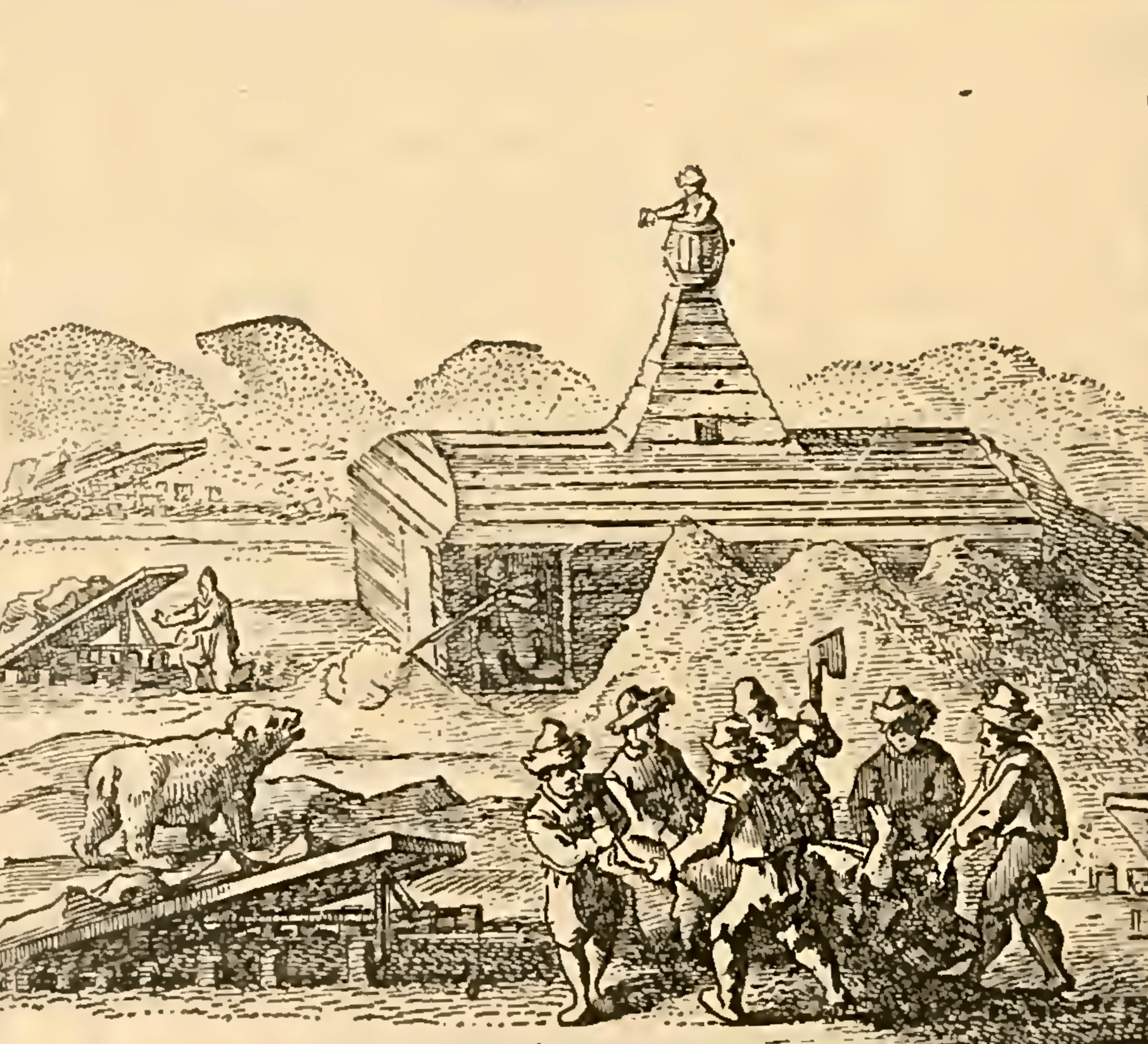
Two groups of men. Two tales of misery. Two very different fates.
Why did one group survive while the other perished? It’s a question that strikes at the heart of how climate change influenced the past, shapes the present, and may imperil our future. So: let’s break it down.
The first question we have to ask is: would the volunteers on Jan Mayen have survived in today’s much hotter climate?
Probably. The blizzards wouldn’t have been as cold. The men could’ve hunted, and the fleet would’ve arrived in April, rather than May.
The Jan Mayen volunteers would not have been healthy, but most, at least, would’ve been alive.
It’s also possible that the Jan Mayen crew would have survived had they overwintered just a few years later.
The region seems to have warmed in in the late 1630s – not by much, but perhaps by just enough to allow the whaling fleet to arrive a couple weeks earlier. For some of the volunteers, that could have made all the difference.
What’s more, the climate of Jan Mayen tends to be colder in the winter than the climate of Amsterdamøya.
Jan Mayen is further south, but Amsterdamøya and the western coast of Spitsbergen are warmed by an ocean current pushing up from the south.
In all likelihood, the men at Jan Mayen were uniquely exposed to the worst weather that a cooling climate could offer.
So, at first glance, there is a simple explanation for the contrasting fates of the Northern Company’s volunteers.
Had the climate not changed – had it not cooled – both groups would have survived.
But if you’re not satisfied with that explanation, I think you’re onto something. Nothing really has one cause, after all. I’m not even sure how many things have a dominant cause, one that clearly matters more than others.
It’s obvious that the volunteers on Amsterdamøya fared better than those at Jan Mayen. One group coped with climate change, and the other did not.
So, we have to ask: did the volunteers on Amsterdamøya survive because they had an advantage that stemmed from economic, political, or geographic conditions?
Possibly. The Northern Company created a whaling station at Smeerenburg because its fleets had repeatedly fought with English whalers. That was no coincidence. Owing in part to geography, the Dutch Republic and England were leading maritime powers. They depended on the sea for trade and security. They had plenty of ships and sailors, so they were the key players at Svalbard.
To avoid a broader war, the English and Dutch separated their whaling operations around Svalbard. The Dutch, already at war with the Spanish Empire, agreed that the English could occupy what seemed like the best bays for whaling.
Yet bowhead whales are smart. They learned to avoid those bays, and Amsterdamøya was close to the edge of the pack ice in the period’s cold climate.
Whales congregated near the edge of the ice to escape orcas, so there were more to hunt at Amsterdamøya than elsewhere. What’s more, the shore at Smeerenburg was shallow enough for whalers to drag carcasses on land, where they could easily strip away blubber.
Smeerenburg therefore grew quickly. Its size at its peak became the stuff of Dutch legend. It was certainly the biggest whaling center of its time, and that probably meant that there were more supplies for the Amsterdamøya volunteers than there were for those at Jan Mayen.
Geography, economics, politics: these were structures, as historians call them, that made it easier for Van der Brugge and his crew to deal with a cooling climate. To use the lingo of climate researchers, Van der Brugge and his crew were less vulnerable to climate change.
But it’s also possible that the volunteers on Amsterdamøya survived because they were, well, better at surviving.
Again: it’s hard to imagine them staying in their cabin in cold, stormy weather, like the men at Jan Mayen. They were relentless, energetic, flexible.
Above all, Van der Brugge seems to have been a skilled leader. His journal is far more detailed than that of Big Pants on Jan Mayen.
It seems to show that Van der Brugge planned for different contingencies, that he cared about his men, that he was someone they could confide in, that he comforted them and relentlessly urged them on, imposing consequences when they fell short of his expectations.
The choices he made, and that his men made in following him, could have been all the difference in allowing them to survive a cooling climate.
Alternatively, might the volunteers on Amsterdamøya have lived because of the decisions of animals, rather than people?
Think of those polar bears. What would have happened had they been less aggressive in the first few months of winter? The men would have been safer, no doubt, but they also would have found it much harder to kill solitary bears.
Would they have had enough meat to last the winter? Probably not. And it’s hard not to wonder: did the bears on Jan Mayen have different behaviors, we could even call it a different culture, that made them harder to hunt?
And what if the bowhead whales hadn’t gathered along the pack ice near Amsterdamøya in the first place?
Smeerenburg would have been smaller, and less capable of sustaining Van der Brugge’s men. It’s unlikely there would have been stockpiles of coal, for example.
So, could the choices of animals have kept their human hunters from dying in a changing climate?

Or did the volunteers on Amsterdamøya survive simply because they were lucky?
Subsequent events suggest that it’s a real possibility. After Van der Brugge and his crew survived, the merchants of the Northern Company decided to send more volunteers to Smeerenburg in the following winter.
This time, everyone died.
They simply couldn’t find enough scurvy grass, so they all got scurvy, and they were all dead when the whaling fleet made it through the ice in the spring.
Van der Brugge and his men could’ve died an equally gruesome death had they not happened across more scurvy grass than could reasonably have been expected.
And they had to make that discovery at just the right time of the year, before the plants withered with the onset of winter. A few stormy days that kept them from rowing, and they would have perished in the bitter cold a couple months later.
But how sure are we about this story in the first place? Our understanding of what happened at Jan Mayen and Amsterdamøya depends almost entirely on two journals that were reviewed by the merchant-masters of the Northern Company, and then widely published across Europe.
Van der Brugge and Van Grootebroeck had every reason to embellish their accomplishments, so we should read their journals with appropriate skepticism.
Our knowledge of climatic trends is also imperfect.
Scientists know that today’s world is warming because they use global networks of weather instruments, such as thermometers, that didn’t exist in the seventeenth century, and they have computer models to make sense of the huge amounts of data provided by these networks. Obviously, there were no computers in the 1630s.
Yes, descriptions of sea ice in journals that sailors wrote aboard their ships suggest that it was unusually cold around Svalbard in the early 1630s. But sailors made no attempt to systematically measure sea ice in these journals, which are called logbooks. And in any case, sea ice can accumulate due to shifts in oceanic currents, rather than local temperatures.
Luckily, we don’t need to rely on sailors’ logs, because the evidence for the causes and consequences of climate change is preserved in nature for hundreds, thousands, even millions of years. Scientists have found many different ways to study this evidence.
They drill into glaciers, for example, extracting long cylinders, called “cores,” that are lined with layers created by the annual accumulation of snow. Snow that falls when the Earth is warm turns out to be a little different from snow that falls when the Earth is cool, so ice cores give us an indication of global and regional temperatures.
They suggest that, indeed, the area around Svalbard was chilly in the early 1630s. Yet that doesn’t necessarily mean that the Northern Company’s volunteers experienced unusually cold temperatures on their specific islands, in the months they overwintered.
It seems significant that the whaling fleets could not reach the coast until May, but again: that may have been caused by ocean currents more than cooling.
Okay, so: if you care about climate change, why should you care about this story?
Well, consider what it reveals. It indicates first and foremost that climate change mattered in the past.
No, we can’t be completely sure how the climate changed around Svalbard, and no, we can’t be totally sure what the overwintering volunteers did from day to day.
Yet the balance of evidence certainly suggests that cooling played a key role in the deaths of the volunteers on Jan Mayen.
If you agree, then consider the implications. Today’s warming is unique for the combination of its speed, its magnitude, and its human cause.
But if climate change influenced our past, imagine what we might learn about how to cope with climate change, just by looking at history in a different way.
Another thing our story seems to teach us is that climate change doesn’t simply make things happen.
Context, choices, chance: all shaped how climate change affected the volunteers on both Jan Mayen and Amsterdamøya.
They appear to have made one group more vulnerable to climate change, and the other more resilient – and that’s partly why one group perished, while the other survived.
And who was exposed to the worst effects of climate change in the first place? It wasn’t the wealthy merchants in charge of the Northern Company.
No, it was the poor men who saw their only chance at social advancement in a desperate, risky effort to preserve the assets of the big company that employed them.
It was the women and children who’d been left behind, and who suffered when husbands and fathers perished in the ice.
Climate change harmed those who had already been marginalized in their society.
Does that sound familiar? If you’ve already thought about global warming, the answer might be yes.
Those of us who work on climate talk a great deal about which social groups are more vulnerable, about how to make people less vulnerable, about how seemingly small changes in average temperature or precipitation can have profound consequences.
It turns out that what matters most today, in an overheating climate, also mattered in the past. And maybe there are things that the past can teach us about climate change that we wouldn’t have thought of otherwise.
Consider the decisions of whales and bears. Should their flexibility in response to human hunters in the changing Arctic of the seventeenth century make us more optimistic about their survival in our century? Could these big-brained animals find new ways to live, and new ways to engage with the Inuit, Inupiat, Yupik, and Chukchi communities in the Arctic?
Relationships between climatic and social changes can often seem obvious today. Rapid warming in the Arctic, for example, seems likely to drive polar bears to extinction. There won’t be enough sea ice for them to hunt the seals that are their prey.
But the past teaches us to be careful about our conclusions.
Even when it comes to the fate of fourteen men on two little islands, things are rarely as clear-cut, indeed rarely as knowable, as they appear to be.
I often say that, when we try to determine how climate change affects us, it’s important to be transparent about our assumptions, to be open about the limitations of our evidence.
And the past reminds us that there’s a limit to how much we can predict the future. We know that Earth’s climate is changing, and will continue changing until we get more serious about addressing the problem. We know that we’ll be harmed by these changes.
But exactly how global warming will affect us – that could well be surprising.

These are some of the issues, the questions and the mysteries that we’ll explore together in The Climate Chronicles.
I’ll take you on a journey through all of human history, from the evolution of our hominid ancestors to the onset of today’s rapid warming. I’ll introduce you to the cutting-edge scholarship that is revealing how climate changed, and what caused it to change.
I’ll show you how climate change may have shaped our history – on the grandest scales, affecting the basic characteristics of human bodies and minds, and on the small scales that, for example, ended the lives of seven whalers on a little Arctic island.
Most of all, I’ll explain why the history of climate change matters today.
We’re in for tough times, that much is sure. I’d like for us to be those seven whalers on Amsterdamøya. I want our civilization to survive.
That’s the main reason that I study the past. I believe that our ancestors have lessons to teach us. I believe that I can learn those lessons and communicate them to others.
In The Climate Chronicles, that’s what I plan to do. I hope you’ll join me.
For Teachers and Students
Review Questions:
- What is climate change?
- Did the climate change around Svalbard during the early seventeenth century? If so, how?
- What happened to the whalers on Amsterdamøya? What about the whalers on Jan Mayen?
- What can the story of these whalers tell us about the history – and future – of climate change?
Key Publications:
Degroot, Dagomar. “Blood and bone, tears and oil: Climate change, whaling, and conflict in the seventeenth-century Arctic.” The American Historical Review 127, no. 1 (2022): 62-99.
Degroot, Dagomar, Kevin J. Anchukaitis, Jessica E. Tierney, Felix Riede, Andrea Manica, Emma Moesswilde, and Nicolas Gauthier. “The history of climate and society: a review of the influence of climate change on the human past.” Environmental Research Letters 17, no. 10 (2022): 103001.
Mann, Michael E. Our Fragile Moment: How Lessons from Earth’s Past Can Help Us Survive the Climate Crisis (New York: PublicAffairs, 2023).
Van der Brugge, Jacob Segersz. Journael, of dagh-register, gehouden by seven matroosen, in haer overwinteren op Spitsbergen in Maurits-bay, gelegen in Groenlandt, t’zedert het vertreck van de visschery-schepen der geoctroyeerde Noordtsche Compagnie, in Nederlandt, zijnde den 30. Augusty, 1633. tot de wederkomst der voorsz. schepen, den 27. May, Anno 1634. Gillis Joosten Saeghman, Amsterdam ca. 1665.
Video and Audio Credits:
Images: Bathsheba Demuth, Photograph of Svalbard, 2019.
Audio: AIVA, Runway.
Video: Runway, Sora.
Funding provided by Georgetown University’s Earth Commons.
Leave a Reply