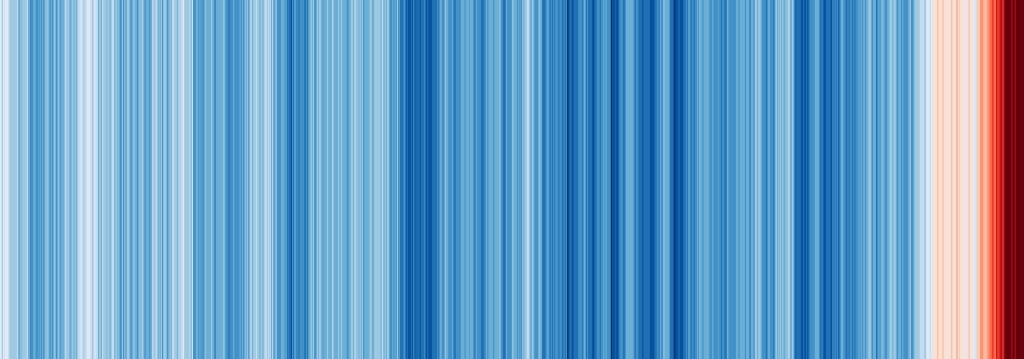
Listen to the Episode:
Some 13,000 years ago, the Pleistocene world was warming – fast.
Average global temperatures had soared by more than three degrees Celsius since the chilliest point of the Last Glacial Maximum, around 7,000 years earlier.
Ice sheets were in headlong retreat, and meltwater flowing into the ocean had helped raise sea levels by some 200 feet.
Then, about 12,900 years ago, everything changed. Much of Earth’s northern hemisphere suddenly cooled down. In some parts of Greenland, temperatures plummeted by more than ten degrees Celsius – in just a few years!
It was like flipping a switch. And the light stayed off. For more than a millennium, a good part of our planet was, again, bitterly cold. Humanity’s capacity for adaptation was once more put to the test.
How was it possible? How did the Earth change so abruptly?
The immediate cause seems to have been a sudden slowdown, maybe even a collapse, of the Atlantic Ocean currents that today push warm, salty water north towards the Arctic.
The influx of huge amounts of freshwater can disrupt these currents. Since they function like a pump that transports heat from the equator into the northern hemisphere, there is widespread cooling when they break down.
But what could have spilled so much meltwater into the Atlantic Ocean that it hobbled a planetary pump moving some 1.5 trillion cubic meters of water every day?
A leading explanation has long focused on what was then the world’s largest lake.
Covering about 400,000 square kilometers across today’s North American prairie, that lake – named Agassiz – slowly emerged and expanded as meltwater trickled from the shrinknig Laurentide Ice Sheet.
At its height during the Last Glacial Maximum, the ice sheet had been, by some metrics, the world’s biggest glacier. Once, it had covered most of present-day Canada, and huge parts of the northern United States.
For millennia, the waves of the lake lapped against the ice sheet’s retreating flank. One day, the long thaw may have reached a critical point. Suddenly, the ice could no longer hold back the water.
What must it have been like to be on the lakeshore as the water smashed through the ice, like a liquid hammer? Can you imagine how the waves must have roared, and the Earth must have trembled?
In an instant, up to four million cubic meters of water slammed into rivers and rushed out towards the Arctic or Atlantic Oceans.
That’s how much water broke free. Every second. For a year! More than the total discharge of all of today’s rivers combined.
By the time the flood abated, the waters of Lake Agassiz had fallen by up to 200 feet. Perhaps 15,000 cubic kilometers of water had drained into the ocean. That’s as much as two thirds of all the water in the Great Lakes of today’s Canada and America.
It was enough to shut down the warm currents of the north Atlantic, and drag a good part of the world back into glacial conditions.
Or so most scientists have believed. There are other, even more extreme explanations.
And there is a frightening possibility.
Today, as rapid warming melts the Greenland ice sheet, the currents of the Atlantic Ocean may be weakening again.
Soon, they could collapse.
Depending on where you live, another deep freeze may loom in your future.
Welcome to the tenth episode of The Climate Chronicles, the fourth episode of our second season, “Escaping the Pleistocene.”
In this episode, we’ll begin by exploring what was like to live in the Last Glacial Maximum, about 20,000 years ago, when the Earth was so cold that it was, in some respects, a fundamentally different planet from the one we live on.
We’ll consider how and why the Earth started to warm up, and we’ll learn how ancient pollen, of all things, led scientists to realize that the warming came in fits and starts.
Then we’ll dig into the possible causes of what may be the most interesting period of climate change in human history: the sudden, northern hemisphere reversion to near-glacial conditions that we call the Younger Dryas.
Finally, we’ll survey diverse evidence that seems to reveal that our ancestors were remarkably flexible, remarkably resilient, even in the face of the most abrupt climatic changes of the Pleistocene.
We may have a lot to learn from them. Especially if another Younger Dryas lies in our future.

By what point were we alone in the Pleistocene? When exactly was there no other hominin species left on Earth?
It’s impossible to know for sure. One reason is that a key method for precisely dating past events doesn’t work for anything that’s older than about 40 to 50 thousand years, and we’ve already seen that this is probably when Neanderthals went extinct.
Now, you’ll remember that in an earlier episode, I explained that when cosmic rays smash into our atmosphere, they continually produce radioactive isotopes. One of those isotopes is called carbon-14, with the number 14 referring to the total quantity of protons and neutrons in the atomic nucleus: 6 protons, and 8 neutrons.
Carbon-14 is very rare. Some 99% percent of the carbon on our planet is carbon-12. This isotope is stable, and so not radioactive, because it has as many protons as neutrons in its nucleus. About 1% of Earth’s carbon is carbon-13, which is also stable, because it has just one less proton than it has neutrons.
Out of every trillion carbon atoms, just one is carbon-14. The isotope is rare partly because it has two more neutrons than protons, and that makes it unstable. It decays, meaning it gives off particles as radiation in order to correct the unequal mix of protons and neutrons in its nucleus. Eventually, it manages to transform a single neutron into a proton, which turns it into nitrogen-14, a stable isotope.
Okay, so, shortly after they’re created, carbon-14 isotopes bond with oxygen, creating radioactive carbon dioxide. Of course, plants absorb carbon dioxide, herbivorous animals eat plants, and carnivorous animals eat them. Traces of radioactive carbon-14 therefore end up in every living thing.
While organisms are alive, they maintain a steady ratio of carbon-14 to carbon-12. That’s because they constantly replenish carbon by breathing, in the case of plants, and eating, in the case of animals.
When organisms die, however, they stop replenishing carbon. Now the carbon-14 in their bodies begins to whittle away through radioactive decay. But the carbon-12 remains stable.
The ratio of carbon-14 to carbon-12 therefore begins to change. So, the older the dead organism’s remains, the less carbon-14 it will contain, relative to carbon-12.
This is the foundation of radiocarbon dating. You calculate the age of a dead organism using the ratio of carbon-14 to carbon-12 in its remains. In essence, it’s simple and effective. But it does have some drawbacks. One is that carbon-14 has a half-life of 5,730 years. This means that every 5,730 years, half of its atoms decay into nitrogen-14.
So, by 11,460 years, only a quarter of the original carbon-14 is left. And by 17,190 years, only an eighth is left. After 40,000 years, there’s so little carbon-14 remaining in an organism’s remains that measuring its age can be nearly impossible.
The upshot is that it’s really difficult to date the final artifacts plausibly created by Neanderthals with enough precision to determine when, exactly, the last Neanderthals vanished from our planet.
And it’s always possible – in fact, probable – that there are artifacts that archaeologists haven’t yet uncovered, in places where isolated Neanderthal bands struggled on after most of the species had gone extinct.
The evidence for Denisovan survival after about 40,000 years ago is even more limited. Get this: at a high-altitude cave in Tibet, geneticists have found Denisovan DNA molecules scattered in sediments. There aren’t even skeletons!
Imagine sprinkling a few of your molecules into the dirt outside your home: that’s the evidence we’re working with here.
You can’t use radiocarbon dating with DNA molecules, but you can very approximately date sediment layers. The sediments seem to be around 40 to 30,000 years old, but DNA, being tiny, can travel vertically through sediment, so . . . who knows exactly? This is why radiocarbon dating is so helpful, when we can use it.
In any case, there is a small but real chance that as the last glacial period cooled and ice sheets began to grow in the southern hemisphere after about 33,000 years ago, sapiens were not yet the only hominin on our planet.
But by the time Milankovitch cycles in Earth’s orbit and rotation had aligned to trigger profound reductions in atmospheric carbon dioxide and bring about the coldest point of the Last Glacial Maximum, roughly 20,000 years ago, we were definitely alone.
So, it’s time for us to say goodbye to our hominin cousins. From this point on, our podcast will deal with humans only.

How different was our planet during the Last Glacial Maximum?
Well, the site of today’s Chicago was covered by a glacier roughly one kilometer thick. The glacier, known as the Laurentide Ice Sheet, covered the location of Toronto with ice that was probably about two kilometers thick.
In Europe, the Scandinavian Ice Sheet covered what is now Copenhagen with up to one and a half kilometers of ice. The locations of Oslo, Helsinki, and Stockholm were all under about two kilometers of ice.
Glaciers also pushed out of mountain ranges. In the Andes, the Patagonian Ice Sheet expanded until it covered much of southern Argentina and Chile. Glaciers more than a kilometer thick pushed into valleys across Tibet and the Himalayas. Ice sheets ground their way into the Rhone, Rhine, and Danube valleys. Giant glaciers carved enormous valleys all along the Rocky Mountains.
Currently, about 10% of Earth’s land surface, or around 15 million square kilometers, is covered by glacial ice. In the Last Glacial Maximum, however, ice sheets occupied about one third of Earth’s land!
And with so much water bound up in ice sheets, with lower temperatures leading to less evaporation and with profound changes in atmospheric circulation, the world was parched.
The Sahara was a desert, just like it is now, but its southern border pushed hundreds of kilometers beyond its present-day limit. Massive dune fields spread across central Asia. Deserts across the American southwest were much bigger than they are now; so were the Atacama and Patagonian deserts in South America.
Our planet was saturated with dust. Bigger deserts, lower sea levels, and intensified winds, created by strong temperature differences between ice sheets at higher latitudes and tropical regions, all churned up huge amounts of dust.
In fact, deposits in ice cores tell us that, in the far north and south, there could be more than 20 times as much dust in the atmosphere as there is now.
In a previous episode, I compared today’s global warming to the runaway heating that may have destroyed the habitable climate of ancient Venus. Today, it does feel like we’re forcing Earth to become a little more like Venus.

Well, in the Last Glacial Maximum, Earth became more like Mars. It was drier, dustier, shaped to a greater extent by wind – and above all, icier.
Many hunter-gatherer communities struggled to respond. Computer models simulate a broad decline of Europe’s human population, for example, from about 330,000 before the Last Glacial Maximum to about 130,000 by about 23,000 years ago.
Archaeological evidence indicates that settlements that had been occupied for parts of the year by semi-nomadic hunters were now totally abandoned.
For example, at Kostenki, on the Russian Plain, large structures built with mammoth bones and skulls, complete with workshops and hearths, were deserted for millennia.
In Moravia, a region in the eastern Czech Republic, equally complex residential settlements, also built using mammoth bones, were once the nerve centers of communal hunts.
They were also thriving hubs of artistic innovation, with workshops where sculptors fired ceramics to make detailed figurines. But they, too, were abandoned during the Last Glacial Maximum.
Archaeological remains tells us that European survivors gathered in refugia: southern France and northern Spain, for example. It was almost like a repeat of what happened to the Neanderthals at the beginning of the glacial period that would eventually culminate in the Last Glacial Maximum.
Human communities, however, adapted not only by migrating, but also by developing new tools and techniques for hunting and gathering. In present-day Iberia and southern France, they invented remarkable, finely worked and slender projectile points, using delicate slivers of flint.
More effective weapons helped them hunt cold-adapted animals across the tundra that had expanded throughout Europe.
The flint weapons spread quickly, indicating that human communities remained much more connected than Neanderthal groups had been. In fact, some tools and ornaments seem to have travelled hundreds of kilometers!
Communities also adapted by broadening their diets. Groups that gathered in caves across today’s France and Spain seem to have hunted small game as well as big herbivores, and they fished while gathering plants.
Some of the most interesting examples of this diversification response to climate change come from what is now northern China. At the Shizitan archaeological site along the Qingshui River – a tributary of the Yellow River – researchers have uncovered grinding stones which seem to reveal that foragers collected grasses such as wild millet and maybe wheat and barley, along with beans, yams, and roots.
These plants would be staple crops for later agricultural communities. During the Last Glacial Maximum, gathering their edible bits provided communities with a new sources of nutrients in a less habitable world.
There’s evidence that some communities diversified their diets because they were learning how to pull more nutrients out of environments that remained stable and productive even during the coldest phases of the Last Glacial Maximum.
Researchers have found a submerged community in the Sea of Galilee, for example, that would have been above water during the Last Glacial Maximum. Its inhabitants seem to have caught fish, hunted gazelle and deer, trapped hares or birds, gathered wild cereals and fruits, and even collected tortoises – all because local wetlands provided a rich and constant collection of plants and animals for humans who were flexible and creative enough to exploit them.
Other communities, however, continued to specialize on hunting the biggest and baddest animals of the Pleistocene world.
Archaeologists have found bone and ivory sewing needles, awls, and beads at the Yana Rhinoceros Horn Site in eastern Siberia, for example, revealing that hunters had learned to protect themselves against the cold with tailored fur clothing that might keep you warmer than a Canada Goose parka. In fact, in this part of the Arctic, hunting continued right through the chilliest centuries of the Last Glacial Maximum!
I find it endlessly interesting that human responses to the most extreme period of climate change in hominin history were so diverse, and in many cases so ingenious. But perhaps it’s no surprise.
The genetic and cultural evolution of our ancestors seems to have happened in response to climatic change. We may exist today because that evolution had reached a point, by about 30,000 years ago, that allowed human communities to adapt to climate change far more effectively than even our closest relatives, the Neanderthals.
Now, not even the Last Glacial Maximum could stop us.

As cycles in Earth’s rotation and orbit fell out of sync, by about 18,000 years ago, some parts of the Earth began to warm ever so slightly. Remember, one nudge, one little change in temperature, can be all the Earth needs to radically transform itself.
In the northern hemisphere, a modest thawing might have sent freshwater into the Atlantic Ocean, slowing the Atlantic Meridional Overturning Circulation, or AMOC: that system of currents I mentioned in the introduction to this episode.
Since the currents bring warm water northward, the slowdown might have led to an accumulation of heat in the southern hemisphere. Around the Antarctic, shifting wind patterns and melting sea ice could have released carbon dioxide from the deep ocean.
Now, as more carbon dioxide entered the atmosphere, the Earth started to warm, and some regions grew wetter. Less aridity meant less dust, so fewer nutrients ended up in the ocean to nourish plankton. Eventually, there was less plankton to absorb atmospheric carbon dioxide, which in turn meant that more carbon dioxide built up in the atmosphere.
It’s amazing how the different parts of Earth’s climate system can interact to intensify or prolong an initially modest climate change.
After about 7,000 years, carbon dioxide levels had increased by 60 or 80 parts per million, or PPM. It was this increase that warmed our planet by an average of about three degrees Celsius, as I said earlier, and raised sea levels by around 200 feet!
Just think – human emissions have increased carbon dioxide concentrations in the atmosphere by about 140 PPM over the last, well, 140 years.
So far, Earth has warmed by about one and a half degrees Celsius. But the most likely scenario for how much carbon dioxide we release into the atmosphere by the end of this century has us roughly doubling the quantity of carbon dioxide in the atmosphere, compared to where it was in the late nineteenth century.
That will mean adding another 140 PPM to the carbon dioxide in Earth’s atmosphere, bringing it up to 560 PPM in total.
Imagine: if an extra 60 or 80 PPM so dramatically changed the world in the wake of the Last Glacial Maximum, what do you think an extra 280 PPM will do to our Earth?
By looking at the deep past, we can begin to see why it’s so crucial that we limit the buildup of carbon dioxide in the atmosphere. It takes a while for the Earth to complete its response to changes in carbon dioxide concentrations, so although the impacts of global warming are adding up, we still have time to act.
If we don’t act, our kids and their kids may struggle to live on a planet we wouldn’t recognize.
Now, the great thaw that followed the Last Glacial Maximum hit a few speedbumps, two of them much bigger than the other.
It seems that, around 18,000 ago, temperatures across the northern hemisphere cooled for several millennia. Then, after about seven centuries of warming, temperatures cooled again around 14,000 years ago, but only for a few centuries at most.
These events are known as the Oldest Dryas and the Older Dryas. Weird names, with an interesting origin.
So, at the turn of the twentieth century, geologists and botanists discovered both periods by, for the first time, analyzing ancient pollen in search of evidence for past climate changes.
Just like the tiny shells in ocean sediments, pollen grains fall on soil and eventually wind up in layers of compressed dirt. The lower the layer, the older the dirt – and the older the pollen.
Pollen in sediment layers can be a powerful proxy for environmental change, because different plants drop different pollen grains when environments are different. As environments are transformed, pollen grains belonging to new plants may enter sediment layers.
Now, environments change for many reasons. . It’s not always easy to discern whether human farmers or climate changes were responsible for a fresh accumulation of pollen in a sediment layer.
But of course, no proxy is perfect. Natural archives are always shaped by many forces, only one of which is climate change.
That’s why our attempts to identify past climate changes – our attempts to create accurate climate reconstructions – are always a little uncertain. Researchers constantly work to develop new, slightly more accurate reconstructions, with less uncertainty.

Anyway, the study of pollen is called palynology, and some of the first palynologists were Scandinavian scientists who, beginning in the early twentieth century, dredged up cylinders, or cores, of old dirt from lakes and bogs in Sweden.
They quickly found that pollen belonging to the Arctic Dryas appeared in very old sediments – sediments from the millennia we now associate with the Oldest and Older Dryas events.
Dryas octopetala is a cold-adapted white flower that goes by many names and flourishes at high latitudes and altitudes. The appearance of its pollen in sediments from regions that are now too warm for the plant to grow was a sure sign that temperatures across some parts of the northern hemisphere, at least, cooled down. And by counting layers, researchers discovered that the cooling happened around 18,000 and 14,000 years ago.
They coined the terms “Oldest Dryas and “Older Dryas” for these periods of climatic cooling. It later turned out that the Oldest Dryas was essentially a Heinrich event that caused a Heinrich stadial, with that word – stadial – referring to a colder stretch within a glacial period.
Remember, a Heinrich event involves a huge release of icebergs into the northern Atlantic Ocean.
The Older Dryas was much less extreme. It closely resembled the cooling phase of one of those Dansgaard-Oeschger warming-then-cooling events we mentioned in earlier episodes.
The Older Dryas lasted two, maybe three centuries before it yielded to renewed warming.
Both the Oldest and Older Dryas events were connected to slowdowns of the AMOC currents, owing to all that freshwater leaving the Laurentide Ice Sheet either as meltwater or icebergs.
The first slowdown, the one caused by the Heinrich iceberg discharge, was much more severe than the second slowdown.
So, you may be wondering: older, oldest, but relative to what?
Well, about 12,900 years ago, another long-lasting and severe reversion to near-glacial conditions plunged much of the northern hemisphere into a renewed deep freeze that would endure for more than a millennium.
Ice cores tell us that, within a matter of decades, and maybe even years, temperatures in parts of Greenland plummeted by an average of perhaps 10 degrees Celsius.
Pollen and lakebed sediments, which can both reveal changes in vegetation, suggest that some European regions cooled by more than six degrees Celsius, on average. Temperatures in parts of North America cooled nearly as much.
You now know that these changes in temperature may seem relatively modest, but actually involve total transformations of regional ecosystems. Almost overnight, environments that could be easily inhabited by our ancestors grew perilously cold.
Many also dried out. Pollen and lake sediment records suggest that cold Atlantic conditions suppressed evaporation, which in turn led to less precipitation across western Europe, for example.
Stalagmites and other proxies indicate that the Asian and African monsoons weakened, owing in part to the southward migration of the intertropical convergence zone, the equatorial rain belt that we mentioned in episode 5. The belt moves south when the northern hemisphere gets colder, and its movement meant that some places actually got a bit wetter – the Amazon, for instance.
This sudden cooling, with its profound implications for global precipitation patterns, is known as the Younger Dryas.
Now, paleoclimatologists long agreed that a sudden, catastrophic outflow of Lake Agassiz into the Arctic and North Atlantic Oceans caused the Younger Dryas by, once again, slowing down those Atlantic Ocean currents we call the AMOC.
It does seem that the Laurentide Ice Sheet had retreated enough by about 12,900 years ago to open an outlet from Lake Agassiz into the North Atlantic. Computer models show that water spilling from the lake into the ocean could indeed have brought about an AMOC collapse.
The trouble is that there’s little evidence of a spike in sea levels dating to the onset of the Younger Dryas. The discharge from Lake Agassiz should have been big enough to lift the oceans a little.
So, for nearly two decades, a group of maverick scientists have proposed an even more extreme cause for the Younger Dryas. They’ve argued that a small asteroid or comet either exploded in the atmosphere or smashed into an ice sheet. Widespread fires wiped out Pleistocene megafauna, they insist, and soot suspended in the atmosphere created an “impact winter” – in other words, the Younger Dryas.
The overwhelming majority of paleoclimatologists rejected that idea offhand. In my view, part of the reason they did is that asteroid and comet impacts can feel like science fiction, rather than science fact. And science fiction didn’t seem necessary to explain the origins of the Younger Dryas.
It’s a little like bringing up ancient alien astronauts to account for the construction of the pyramids.
But, in addition to being a historian of climate change, I’m also a historian of humanity’s relationship with outer space environments. In fact, I’m currently the Blumberg Chair of Astrobiology at the Library of Congress.
This might give me an unusual perspective on the asteroid or comet impact possibility.
In short: I think it’s plausible. The reason is simply that there are a lot of asteroids in orbits that can cause them to smash into Earth. As I say these words, astronomers have plotted over 37,000 Near-Earth Objects, of which nearly 2,500 are potentially hazardous asteroids.
These are asteroids that are both at least big enough to wipe out a city, and have a realistic chance of smashing into Earth someday. By nudging asteroids into new orbits, the gravity of the planets, especially Earth and Jupiter, both depletes and replenishes this population of dangerous little worlds.
Anyway, scientists calculate that an asteroid roughly one kilometer in diameter should hit the Earth once every 500,000 to 1,000,000 years. If the asteroid travels at a typical speed – 20 kilometers per second, for example – then it could hit the Earth with the force of, oh, 200 billion tons of TNT.
That’s almost 100 times more powerful than the world’s entire nuclear arsenal!
Imagine an explosion of that magnitude on a continent-sized ice sheet! Just think of how much meltwater could careen into the Atlantic Ocean. How could the AMOC survive? And again, think of the probabilities. The impact of a kilometer-wide asteroid should have happened multiple times during the Pleistocene.
What’s more, there does seem to be something weird about sediment layers that are dated to the start of the Younger Dryas. There are traces of meltglass, for example, that seem to form in the heat of impacts, and elements such as iridium and platinum that are common in asteroids, but not on Earth. There’s even a layer of carbon-rich sediment at dozens of Clovis-age archaeological sites in North America. Could a continental fire have caused it?
Proponents of the Younger Dryas Impact Hypothesis claim that such evidence is definitive, but the reality is it could have had much more mundane causes: wildfires, for example, or volcanic eruptions. There’s also no crater – although impact advocates claim there wouldn’t be one if an asteroid or comet smashed into an ice sheet – and there’s no sign of global fire activity at the onset of the Younger Dryas.
So, at this point, the impact hypothesis remains a niche idea, albeit one I find interesting, and perhaps even plausible.
An alternative hypothesis for the cause of the Younger Dryas posits that a massive eruption of the Laacher See volcano in Germany abruptly cooled the Earth.
According to this idea, the sulfuric gases launched into the stratosphere by the eruption chilled the northern hemisphere to such an extent that sea ice abruptly expanded, weakening the AMOC and setting in motion the ice-albedo feedback. More ice reflected more sunlight into space, leading to more ice, and so forth.
It’s an interesting idea, because Laacher See exploded at around the same time as other eruptions that could have compounded its climatic impact – and at the same time as the onset of the Younger Dryas.
But this potential cause of the Younger Dryas also has its problems. Radiocarbon dating of the growth rings in ancient trees has sparked some controversy about the exact timing of the eruption, and more importantly it seems bizarre that an eruption far smaller than the Toba or Los Chocoyos explosions could cool the Earth for more than a millennium when, as we’ve seen, the bigger eruptions couldn’t.
There’s also the possibility that there was more than one cause for the magnitude and duration of Younger Dryas cooling.
For example, it’s plausible that, by contributing to the extinction of megafauna around the world, human hunters had lowered atmospheric concentrations of methane. Remember: mammoths, mastodons, and other big animals were flatulent.
Together they sent a lot of methane into the atmosphere, and methane is a really potent greenhouse gas.
Computer simulations suggest that the extinction of many big herbivore species in the late Quaternary lowered global temperatures by about half a degree Celsius.
If so, humanity could have worsened the cooling of the Younger Dryas. That would mean that human-caused climate change might be older than agriculture, writing, and just about everything you may associate with civilization!
Regardless of why the Younger Dryas happened, there’s little doubt that the AMOC was implicated. To me, this is sobering.
On any given day, the AMOC moves enough water to fill more than 600 million Olympic-sized swimming pools. And each drop takes about a thousand years to make a full circuit around the Atlantic Ocean.
It is a pump on a scale that’s just impossible to visualize, and it fundamentally shapes Earth’s climate.
Following Earth’s rotation, winds that predominantly blow from the west pass over the currents of the AMOC and deliver its heat and moisture across the northern hemisphere.
Among other things, this relationship between atmospheric and oceanic circulation helps give Europe its mild, maritime climate; brings rains to much of sub-Saharan Africa; influences the strength of the West African and Indian monsoons; and moderates sea levels off America’s east coast.
And yet, for all its staggering size and planetary importance, the AMOC can switch to a totally new state in a matter of decades, or maybe even years.
The Younger Dryas is recent enough to be visible in proxies extracted from many archives of nature. It shows us, with particular clarity, just how profoundly temperature and precipitation patterns change during an AMOC breakdown.
I can’t think of a better example of just how unstable our planet can be.

What factors determine how big of an impact a change in climate can have on a human population?
Well, the first factor is the magnitude of the climatic shift. The Last Glacial Period and especially its coldest stretch, the Last Glacial Maximum, involved a huge change in the world’s average temperature. As we’ve seen, it led to a wholesale transformation of our planet, forcing human populations to adapt – or die.
A second factor is the speed of the climatic shift. It took just years for the Younger Dryas to dramatically cool the northern hemisphere. When climatic shifts happen that suddenly, it’s extremely difficult for many animal species to respond – including humans.
A third factor is the extent to which the ecosystem that supports a human population is susceptible to change. We’ve already seen that savannah environments are less sensitive to climatic trends than forests, for example, or wetlands.
A fourth, often overlooked but perhaps especially important factor is the vulnerability of human populations. There are many ways of being vulnerable, as we’ll see in future episodes. For now, I want to propose that social rigidity is a key aspect of vulnerability.
If your community or society is rigid – if on broad terms it can’t easily change – then it’s likely to suffer when environmental conditions force it to change. That’s especially true if your community has maximized its preferred method of extracting resources from an environment. This maximalization can make it brittle.
Picture a rural community in, say, northern France, about a thousand years ago.
Peasants in this community cultivate wheat, thresh and winnow the wheat into grains, then grind the grains into flour, all by following an intricate seasonal schedule and carefully managing land so half their fields are always fallow (that is, free of crops).
The peasants survive on their harvest. Yes, they set aside some grains for their feudal lord, who owns the watermill they use to grind the grain into flour. If they still have some grain left over, they sell it during a local market day.
But for the most part, the peasants grow crops for their own survival. In any given year, they have just enough to feed themselves.
So, what happens when the harvest is ruined by, say, a month-long drought? Well, the lord might have some grains stockpiled in the local granary. But what happens if the drought comes back in the following year? Or the year after that? There’s nothing left in the granary, and there’s not enough trade to buy grain.
Famine sets in. Our peasants start to starve.
Why? Because our hypothetical community is, overall, quite rigid. Its peasants can’t move, they can’t trade (much), and they depend on a single crop of a single plant.
And our community is brittle. Even in the best of times, it consumes almost everything it grows. There is little surplus food. There is not much of a reserve. And there is no capacity to increase production.
Okay, so: how does this all relate to the Younger Dryas, 12,900 years ago?
Well, many of the diverse, semi-nomadic hunting and gathering populations that experienced the Younger Dryas seem to have been remarkably flexible and durable, much more than our medieval French community, especially when you consider that some also had to cope with the extinction of the megafauna they had hunted.
In central North America, for example, archaeological evidence tells us that mobile communities in the Folsom culture adapted to the extinction of mammoths by hunting smaller animals with newly effective, fluted spear points.
“Fluted” projectiles were shaped with a groove, called a flute, that made them lighter, improved their aerodynamics, and created a thinner but more secure attachment to a shaft.
Folsom communities also seem to have fortified high-elevation winter shelters in Colorado, for example, quite possibly to insulate them against much colder weather.
In northeastern North America, pollen records suggest that tundra replaced forests when temperatures plummeted at the start of the Younger Dryas.
Caribou moved into these new tundra environments, and archaeological evidence indicates that human hunters – also armed with fluted projectiles – quickly joined them. This time, mobility, opportunism, and technological innovation helped a human community thrive not just in spite of climate change, but partly because of it.
Even in those parts of Europe where Younger Dryas cooling was most severe, some populations flourished in similar ways.
Hunters in the Ahrensburgian culture of the North European Plain, for example, gathered for mass hunts of reindeer and horses in tundra and steppe landscapes that expanded in a colder climate. They too used sophisticated, finely crafted arrowheads to bring down their prey.
Still, European evidence also tells us that some calamities overwhelmed even our hunter-gatherer ancestors. Near the Laacher See eruption itself, for instance, archaeological evidence suggests that many communities were destroyed or scattered.
The archaeologist Felix Riede argues, persuasively, that the survivors lost the bow-and-arrow technology with which they’d hunted prey. Now, they knew only how to create simpler weapons, such as darts and spear throwers.
It seems, therefore, that sufficiently extreme environmental disasters could bring about technological devolution by shrinking and isolating even human populations. For a few centuries, some of our ancestors experienced an echo of what the Neanderthals endured thousands of years earlier.
And some communities actually seem to have sacrificed their mobility in order to survive the Younger Dryas. In what is now Japan, for instance, communities adhering to the Jōmon culture clustered along rivers that allowed them to intensify their exploitation of resources – such as fish – that don’t appear to have changed much during the Younger Dryas.
What stands out in these and many, many other examples unearthed by archaeologists is the sheer diversity of human responses to the Younger Dryas.
Human technology and culture had developed sufficiently for populations to have many options when confronted with climate change.
Communities were connected enough for innovations to spread quickly, but populations in different world regions were sufficiently isolated for responses to look very different from place to place.
Human numbers were still small, but the world was big, meaning that migration was usually an option when necessary. For that reason, violence between communities seems to have been very rare. Typically, there was little need to compete for a single resource.
As we’ll see in later episodes, it’s entirely possible that most of the hunter-gatherer populations of the Pleistocene were more capable of adapting to climate change than many of the cities and empires that would emerge with the development of agriculture.
In fact, it’s no given that our civilization would respond to the Younger Dryas more effectively than the hunter-gatherers who roamed the Earth 12,000 years ago.

Today, vast quantities of meltwater are spilling into the Northern Atlantic from the thawing Greenland ice sheet.
If you’ve ever looked at a map of worldwide temperature anomalies, you’ve probably seen a little blue blob northeast of Iceland. That blob is a consequence of water spilling into the Atlantic: cold water, because it recently melted off Greenland’s ice.
Is it possible that enough meltwater drains from Greenland that the AMOC shuts down?
In a word: yes.
The real question may be how much the Arctic has to warm, and Greenland has to melt, in order for that to happen.
Now, very recently, an open letter signed by 44 climate scientists warned that the AMOC could catastrophically weaken or perhaps even shut down within a matter of years.
There’s good reason for concern. Measurements taken by instruments moored to the ocean floor, adrift on the ocean’s waves, or suspended in space, all suggest that the movement of water through the AMOC is indeed slowing down.
Recently, mathematical models and climate simulations independently hinted that the AMOC is destined for a collapse. In fact, both lines of evidence suggest that a breakdown could occur within a matter of years.
It’s difficult to predict the consequences of such a breakdown in a climate already destabilized by our greenhouse gas emissions.
Simulations suggest that average temperatures across Europe could cool by about three degrees Celsius per decade. Compare that to the current global warming rate of some 0.1 to 0.2 degrees Celsius per decade. Let me underscore that: the rate of cooling Europe could be 15 to 30 times greater than the worldwide rate of warming is today.
In the event of an AMOC collapse, much of the continent would quickly become too cold for agriculture.
Sea levels off America’s East Coast, meanwhile, could abruptly rise by up to a foot, as warm water that would otherwise have flowed north stays put. Coastal infrastructure would be overwhelmed.
The West African and Indian monsoon could also weaken, leading to catastrophic droughts and perhaps even famine across Asia and Africa.
At the same time, precipitation could rise in the Amazon, delaying or even preventing a conversion of much of the rainforest into savanna, which climate models otherwise simulate in a world that continues to warm.
There is some reason for optimism. A brand-new suite of simulations now suggests that the AMOC will persist this century in any realistic warming scenario.
But other new simulations indicate that the AMOC will keep slowing down.
So: there is a risk. A risk few people know about.
A risk that the world will look radically different in a few decades, perhaps, than it does today.
A lot more like the world of the Younger Dryas.
Would we be able to respond as flexibly, as creatively, as our distant ancestors?
Let’s hope we never find out.
For Teachers and Students
Review Questions:
- What was the Last Glacial Maximum (LGM)?
- What are some ways that human populations responded to the LGM?
- What was the Younger Dryas? What caused it?
- What could happen if the Atlantic Meridional Overturning Circulation (AMOC) collapsed this century?
Key Publications:
Baker, J. A. et al. “Continued Atlantic overturning circulation even under climate extremes.” Nature 638:8052 (2025): 987-994.
Clark, Peter U. et al. “The last glacial maximum.” Science 325:5941 (2009): 710-714.
Cheng, Hai et al. “Timing and structure of the Younger Dryas event and its underlying climate dynamics.” Proceedings of the National Academy of Sciences 117:38 (2020): 23408-23417.
Ditlevsen, Peter, and Susanne Ditlevsen. “Warning of a forthcoming collapse of the Atlantic meridional overturning circulation.” Nature Communications 14:1 (2023): 1-12.
Latif, Mojib, Jing Sun, Martin Visbeck, and M. Hadi Bordbar. “Natural variability has dominated Atlantic meridional overturning circulation since 1900.” Nature Climate Change 12:5 (2022): 455-460.
Liu, Li, Sheahan Bestel, Jinming Shi, Yanhua Song, and Xingcan Chen. “Paleolithic human exploitation of plant foods during the last glacial maximum in North China.” Proceedings of the National Academy of Sciences 110:14 (2013): 5380-5385.
Pontes, Gabriel M., and Laurie Menviel. “Weakening of the Atlantic Meridional Overturning Circulation driven by subarctic freshening since the mid-twentieth century.” Nature Geoscience (2024): 1-8.
Portmann, Valentin et al. “Observational constraints project a ~50% AMOC weakening by the end of this century.” Science Advances 12:16 (2026).
Smith, Felisa A., Scott M. Elliott, and S. Kathleen Lyons. “Methane emissions from extinct megafauna.” Nature Geoscience 3:6 (2010): 374-375.
Töchterle, Paul et al. “Reconstructing Younger Dryas ground temperature and snow thickness from cave deposits.” Climate of the Past 20:7 (2024): 1521-1535.
Voosen, Paul. “Shifting Currents.” Science Magazine (2026).
Yobo, Nana et al., “Volcanic forcing of global climate cooling at the Younger Dryas onset preserved in North American sediments.” Science Advances 12:18 (2026): eaec9030.
Video and Audio Credits:
Video Tools: Runway, Sora.
Audio Tools: AIVA, Runway.
Funding provided by Georgetown University’s Earth Commons.
Leave a Reply